Year-round production of large quantities of high quality agricultural products
is associated with repeated heavy loading of farmlands with fertilizers, pesticides,
and livestock wastes. This, in turn, leads to air, water, and soil pollution
with substances such as pesticides, nitrates, and heavy metals. With increasing
combustion of refuse, lethal dioxins are being released to the environment.
The Department of Environmental Chemistry has a mandate for food security
and ecosystem conservation against a number of farm chemicals, and has 3 broad
targets: risk assessment, risk reduction, and environment remediation.
The Department consists of 3 research groups and 1 team corresponding to
the chemicals targeted, namely: 1) a group researching organic chemical compounds
such as farm chemicals; 2) a group researching heavy metals (in particular,
cadmium); 3) a group researching nutritional salts, such as nitrogen and phosphate;
and 4) the dioxin research team. Each group has its own leader and has several
research units. The major research fields of each group are described below.
Organochemicals Group: Pesticides play a vital role in food security and
will remain indispensable unless more effective and less risky replacements
can be developed. There is much concern about the eco-toxicity of pesticides
in air, water, and soil from farmlands. This group is mainly responsible for
the development of innovative and sophisticated technologies for studying
the influence of pesticides on the environment and methods of decreasing the
amounts of chemicals used. Major research topics are: 1) dynamics of pesticides
in soils, water, and the atmosphere; 2) risk assessment of pesticides in aquatic
organisms such as algae, aquatic midges, and medaka fish; 3) development of
environmentally friendly crop protection systems; and 4) development of technologies
for bioremediation of recalcitrant organic compounds, involving a) molecular
genetics and genetic diversification of bacteria that degrade chlorobenzoates,
PCBs, and 2,4-D, b) in situ bioremediation of soils contaminated with recalcitrant
organic compounds, and c) risk assessment of recombinant bacteria.
Heavy Metal Group: The Codex Committee established jointly by FAO and WHO
is to submit a new international safety standard for cadmium in foods to minimize
its human intake. Under such circumstances, it is a matter of urgency that
we elucidate the behavior of heavy metals in soils and the mechanism of their
absorption by crops, and that we develop technologies to suppress hazardous
metal absorption by crops. The Heavy Metal Group has 3 ongoing research projects:
1) evaluation of heavy metal loadings in arable soils and elucidation of the
mechanisms of their absorption by crops, 2) elucidation of the chemical forms
of heavy metals in soils and development of technology for suppression of
their absorption by crops, and 3) determination of the differences in the
abilities of various staple crops to absorb heavy metals.
Water Quality and Solute Dynamics Group: Recently, public concern has risen
over the contamination of various river basins and lakes by nutrient solutes
such as nitrate nitrogen and phosphate. Since the implementation of new regulations
against NO3N and NO2-N contamination began in 1999, a number of agricultural
activities have been placed under strict surveillance to ensure that NO3N
and NO2-N levels in groundwater do not exceed the critical concentration of
10 ppm. There is an urgent need to formulate an effective solution to this
problem. There are 3 ongoing projects in this group: 1) study of the dynamics
of nitrate nitrogen and other nutrient solutes in soils and small- and medium-sized
watersheds, 2) development of methods for monitoring levels of nutrient solutes
in medium-sized river basins, and 3) evaluation of methods for enhancing the
denitrification capabilities of natural mass flows and development of technologies
for alleviating negative loadings of nutrient solutes.
Dioxin Dynamics Team: Contamination of agricultural products with dioxins
has become a serious concern for both consumers and producers. There is an
urgent need for the production of dioxin-free agricultural products. In this
regard, there are 2 ongoing projects: 1) study of the dynamics of dioxins
in crops and farmland, and 2) development of technology for the physico-chemical
and biological decomposition of dioxins.
|
|
1)
Organochemicals Group
|
The mission of this group is to assess and reduce the environmental
risk caused by application of pesticides and other organic chemicals
in agro-ecosystems, and also to develop bioremediation techniques to
restore environments contaminated with recalcitrant organic chemicals.
The major research topics in FY 2002 were as follows: 1) risk assessment
of herbicides in aquatic organisms, 2) simple detection of the endocrine-disrupting
effects of organic chemicals (Topic 1), 3) mechanism of induction of
systemic acquired resistance to some organic chemicals in plants, 4)
molecular genetics and molecular ecology of bacteria that degrade chlorobenzoates
and 2,4-D in soil, 5) enhanced photodegradation of dioxins, 6) technology
to reduce herbicide outflow from paddy fields into river water, and
7) in situ bioremediation to prevent water pollution derived from herbicide
(simazine) application on a golf course (Topic 2).
Nineteen original research papers were published this FY. In September
2002, this group also organized the second Seminar on Organic Chemicals
Studies - Current Status of Environmental Pollution
Caused by POPs (Persistent Organic Pollutants) - to discuss dynamics in the environment,
ecotoxicology, and technology for degradation of POPs.
Topic 1: In vivo evaluation of endocrine-disrupting
activities of farm chemicals using Japanese medaka
Over the last few years there has been much concern about the endocrine-disrupting
effects of farm chemicals in wildlife. Pesticides applied to paddy fields
are apt to flow out to surrounding water bodies such as rivers and lakes,
and some pesticides are detected frequently at ppb levels. There is an urgent
need to evaluate the endocrine-disrupting effects of these pesticides on aquatic
life.
Japanese medaka (Oryzias latipes) has been used for the toxicity assessment
of a variety of chemicals because it is easily bred and has a short life cycle.
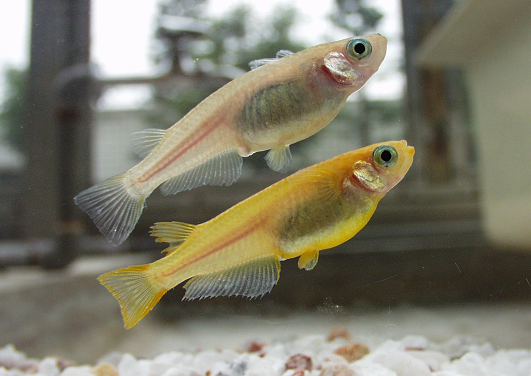
Special attention is currently focused on the d-rR strain of medaka (Photo
1), because a gene controlling body color is located on the Y chromosome.
Hence, the sex genotype - either XX (female) or XY (male) - can be easily
determined by the body color (white or orange-red, respectively). Further,
the presence of sex hormones and their analogs, including estradiol and diethylstilbestrol
(DES; an artificial female hormone), determines secondary sexual characters
such as the shape of the anal fin and occurrence of oviposition. Therefore,
sex-reversal of medaka fish due to hormonal effects can be easily identified
by observation of body color and sexual characteristics. We therefore developed
a simple testing method to evaluate the endocrine-disrupting effects of farm
chemicals in the d-rR medaka strain.
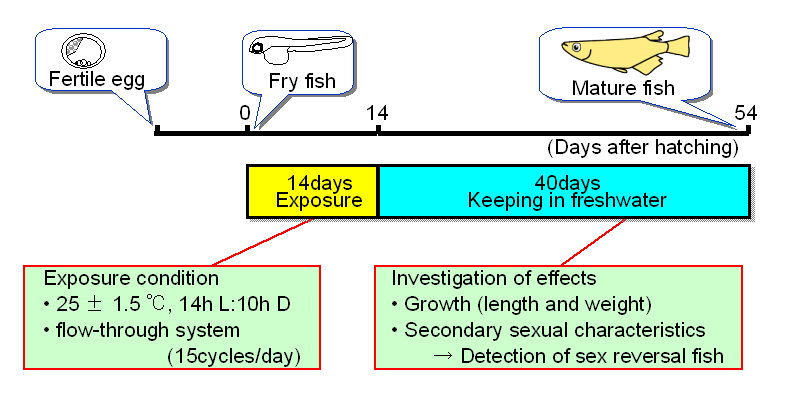
Our method is outlined in Figure
1. Fry of d-rR medaka are exposed for 2
weeks from the day of hatching to the test compound dissolved in 1 L of solution,
by using a flow-through system. The test solution is replaced 15 times a day
in a semi-automatic manner. After 2 weeks' exposure, the juvenile fish are
transferred to fresh water and kept for 40 days until the appearance of secondary
sexual characteristics. The effects of chemical exposure are then investigated
with respect to weight, length, body color, and secondary sexual characteristics.
Finally, the endocrine-disrupting effects are assessed from the sex-reversal
ratio.
We used this method to test the endocrine-disrupting activities of 4-nonylphenol
(NP). The concentrations tested were 0, 10, 30, 100, and 300 μg/L. No sex-reversal
was observed at NP concentrations of 10, 30, and 100 μg/L. When the concentration
was increased to 300 μg/L, no sex-reversal was observed in genetic females,
but 75% of males showed reversal.
Similarly, we examined the endocrine-disrupting activities of 5 herbicides
commonly used in paddy fields: mefenacet, symetryn, benthiocarb, imazosulfuron,
and pretilachlor. Although the concentration of each herbicide was set at
high levels compared with those commonly detected in the environment, no sex-reversal
was detected. With this method, sex-reversed individuals are easily detected
by observation of body color and fin shape, without the need for anatomical
dissection, and the exposure period is reduced to 2 weeks instead of the 2
months needed with conventional methods. (T. Horio)
|
Topic 2: In situ bioremediation of simazine-contaminated soils on a golf course by using charcoal enriched with consortia of degrading bacteria
In recent years, both scientists and policy makers have shown great interest
in technologies for bioremediation of various recalcitrant organic pollutants.
We have succeeded in efficiently absorbing and degrading persistent pesticides
by mixing bacteria-enriched charcoal with pesticide-contaminated soils under
laboratory conditions. To prevent the contamination of subsoils, rivers, and
groundwater with the herbicide simazine, which is widely used on golf courses
throughout Japan and frequently detected in river water, we conducted a field
experiment by laying charcoal enriched with simazine-degrading bacterial consortia
(CD7) under the subsoil of a golf course.
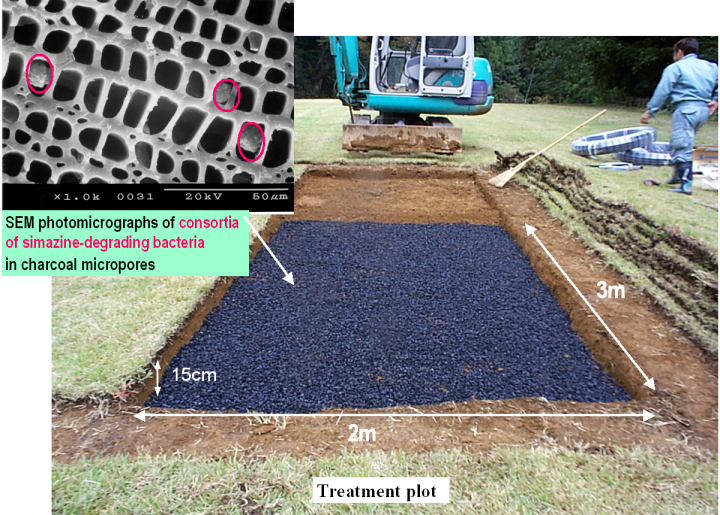
On 16 October 2000, we placed a 1-cm-thick layer of charcoal enriched with
CD7 consisting of 3 kinds of bacteria under the subsoil at 15 cm deep of a
treatment plot in a golf course (Photo 2). In the control plot, charcoal without
CD7 was laid in the same manner as in the treated plot. Porous glass cups
were inserted at 4 locations in each plot to collect the soil solution directly
beneath the charcoal layer. A recommended dose (25 g/a) of water-dispersible
simazine powder was applied on 20 October 2000, and after the application
we periodically examined changes in the simazine concentration in the soil
solution and the soil and charcoal layers, as well as the number of simazine-degrading
bacteria in the charcoal. The simazine was applied twice a year (at the end
of March and the middle of October) for 2 years. The results were as follows.
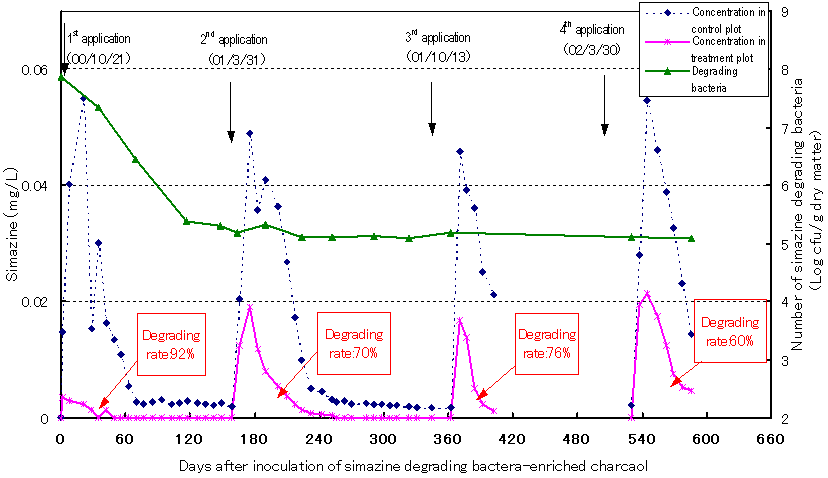
1) Simazine concentration in soil solution (Fig. 2): In the control plot,
simazine at a concentration of 0.01 μg/L or more was detected at all locations
until the seventh week after the first application. In the treated plot, the
simazine concentration was 0.005 μg/L or less at all the sampling locations
until the sixth week after the first application; it was not detected from
the seventh week onward. The simazine-degradation rate in the soil water of
the treatment plot reached 92% in 6 months after the first application, compared
with the control plot. However, this rate was slightly retarded to 70% after
the second application, compared with the control plot. After the third and
fourth application, the degradation rate in the soil water of the treated
plot was still more than 60%.
2) Number of simazine-degrading bacteria in charcoal
(Fig. 2): The initial number of bacteria (7.5 × 10⁷ cfu /g charcoal)
had decreased to 106 cfu/g charcoal by 2 months after introduction of the
bacteria and had declined to 105 cfu/g charcoal 4 months after introduction.
Thereafter, this population level was maintained until the end of the experiment
20 months after introduction.
3) Simazine concentration in the charcoal layer: The concentration of simazine
in the charcoal layer was maintained at 5 to 8 mg/kg dry matter until 6 months
after the first application in the control plot, owing to the adsorption of
simazine. In the treated plot, the concentration reached a maximum (3 mg/kg
dry mater) 1 month after the first application, and afterward decreased to
1/20 of the residual amount in the control plot at 5.5 months after the first
application. After the second application a similar trend was observed. In
the treatment plot, because the simazine absorbed in the charcoal was degraded
by the bacteria living within it, the residual amount of herbicide was much
less than in the control plot.
Therefore, by laying charcoal enriched with simazine-degrading
bacteria consortia under the subsoil of a golf course, we were able to minimize
simazine pollution of the subsoil, river water, and groundwater for at least
several years. (K. Takagi).
| 2) Heavy Metal Research Group
|
The mission of the Heavy Metal Research Group is to elucidate the
input-output balance of heavy metals such as cadmium in arable soils
and to clarify the mechanisms by which these metals are absorbed and
translocated by paddy rice and soybean.
In FY 2002-2003, the group studied the following
major topics: 1) role of roots in Cd concentration in soybean seeds
(see Highlights in the current report); 2) effects of paddy field water management
on the absorption of Cd by rice (Topic 1); 3) evaluation of heavy metal
loading of arable soils by irrigation water (Topic 2); 4) application
of a 113Cd tracer technique in the evaluation of varietal differences
in Cd uptake by soybean and rice; 5) evaluation of heavy metal loading
of arable soils by rainfall and fertilizers; 6) bio-availability of
Cd in Andosols and Gray Lowland soils; 7) dynamics of Cd in the soybean
rhizosphere; 8) screening of rice varieties for low Cd uptake and accumulation
in grains; and 9) mechanisms of absorption and translocation of Cd
in low-Cd-absorption varieties of soybean and rice.
Dr. S. Ishikawa was given an award by the Japanese Society of Soil
Science and Plant Nutrition for his remarkable contribution to the
study of aluminum and low-phosphorus tolerance of plants.
Topic 1: Appropriate water management
to reduce Cd uptake by rice plants
Recently, food safety has become a primary concern of not only consumers,
but also producers and agricultural policy makers. The Codex Alimentarius
Commission (CAC) created in 1963 by FAO and WHO, is intensively discussing
new Cd standards for foods. In light of this we need to minimize the
Cd content of staple crops such as rice and soybean.
The amount of bio-available Cd in soils is of primary importance
to Cd absorption by rice and thence Cd accumulation in grain. It is
a matter of urgency that we develop a promising technology to determine
levels of bio-available Cd in soils and formulate effective water management
practices for reducing the Cd content of rice grains.
We conducted a pot experiment using 6 soils, collected from different
parts of Japan, with different Cd contamination levels. At the relevant
rice crop growth stages, soil solution was collected in a porous cup
buried 15 cm below the soil surface.
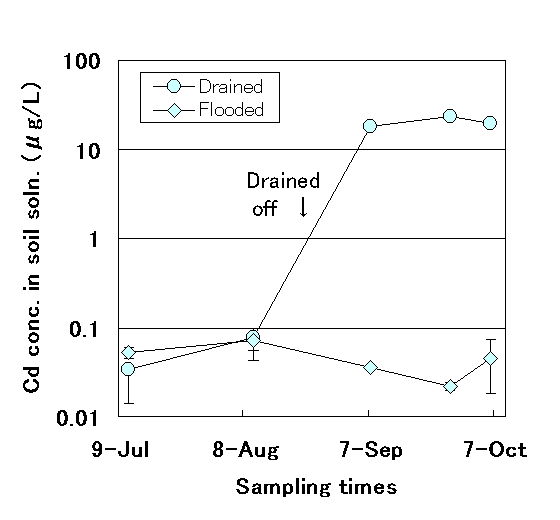
In pots from which the residual water was drained out after heading
7 weeks before harvest, the Cd concentration in the soil solution sharply
increased along with a steep increase in the soil reduction-oxidation
(redox) potential. Two weeks after heading, the Cd concentration in
the soil solution from the drained pots was nearly 100 times as much
as that from the pots that were kept flooded until harvest, and the
Cd concentration in the soil solution of the drained pots remained
high thereafter (Fig. 3, drained pots).
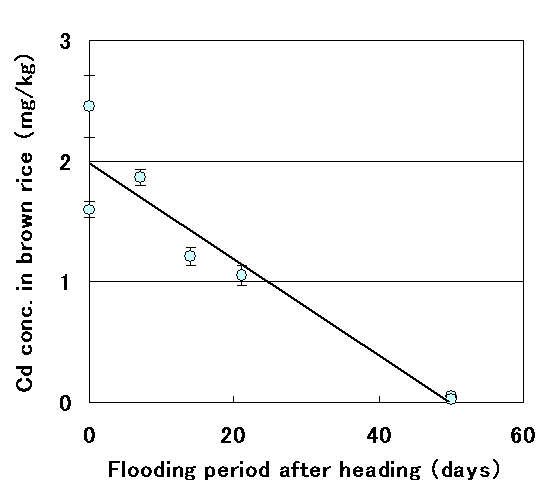
There was an inverse correlation between duration of flooding after
heading and Cd concentration in the hulled rice grains. The longer
the flooding period after heading, the lower the Cd concentration in
the grain (Fig. 4). When soils are flooded, the soil redox potential
decreases toward a negative value, and this gives rise to the formation
of less-soluble Cd compounds such as CdS, thus reducing the Cd concentration
in the soil solution (Fig. 3). It is therefore desirable to keep paddy
fields flooded until as close as possible to harvest, unless harvesting
works are hindered by the wet soil.
The Cd concentration in the soil solution varies greatly with changes
in soil conditions, and, in particular, redox potential. This indicates
that the Cd concentration in the soil solution is a good index of bio-available
Cd in soils; hence, more promising cultural practices for reducing
the Cd content of rice grains could be developed by using the Cd content
of the soil solution as an indicator. (Y. Sakurai, K. Sugahara, and
T. Makino)
Topic 2: Evaluation of Cd loading of
arable soils by irrigation
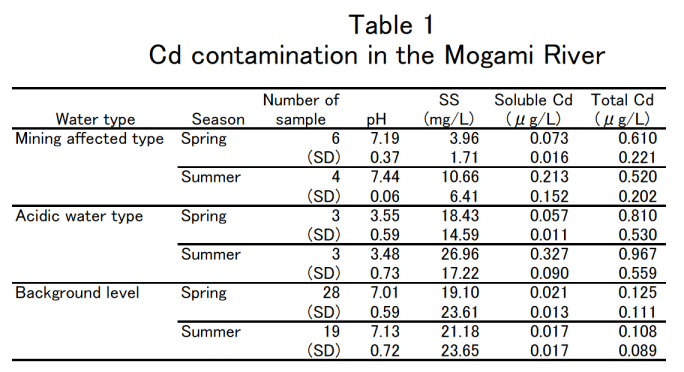
To obtain basic data to estimate the Cd loading of paddy fields by
irrigation water, we collected water samples on 2 occasions - in May
at 37 points and in August at 26 points - from the Mogami River, which
is in one of the main rice production areas in Japan, and we analyzed
both the soluble and total concentrations of Cd. The results are shown
in Table 1. The soluble Cd concentration in spring (May) samples was
lower than that in summer (August) samples, probably owing to dilution
by snow melt. River water containing less than 0.05 mg L-1 of soluble
Cd was considered to be unpolluted and was thus considered to contain "background
level" concentrations. Water containing more than 0.05 mg L-1 of soluble
Cd was most likely to be polluted either by mining or acidity. However
there were no mines upstream of the sampling areas, Cd solubility in
some samples appeared to be enhanced by the acidity. The total concentration
of Cd was not distinctively different between the spring and the summer
samples, probably because of the concentration of suspended solids
(SS) in the river water. There was a moderate relationship between
total Cd concentration (Cd mg L-1) and the concentration of SS (mg
L-1) in the background level water. The average total concentration
of Cd in this water was 0.116 mg L-1. It was apparent that water in
which the soluble Cd concentration exceeded the background level was
either mining-affected or acidic. (T. Saito and S. Murayama)
|
| 3) Water Quality and Solute Dynamics Group
|
The mission of the Water Quality and Solute Dynamics Group is to
clarify the dynamics of solutes such as nitrate-nitrogen passing through
arable lands to water bodies; to develop technologies to monitor loadings
of nitrate-nitrogen and other pollutants; and to reduce these loads
on the environment. We have 5 ongoing projects: 1) elucidation of
the mechanisms of solute movement through the soil and below-ground;
2) development of monitoring methods for nitrate-nitrogen and other
pollutants in medium-sized river basins; 3) development of a technology
for alleviating the agricultural nitrogen load on the environment
by enhancing denitrification; 4) construction of a model adaptable
to medium-sized river basins for prediction of nitrogen load and effluent;
and 5) examination of the characteristics of dioxin effluents from
rice paddy soils to riverine areas. In FY 2002, we successfully estimated
detailed water and nitrate fluxes under field conditions (Topic 1).
We also developed a new retrieval system for water quality monitoring
databases (Topic 2) and a model of SS loadings from arable lands to
rivers (Topic 3).
Topic 1: Water and
nitrate flux through an unconfined aquifer below a cropland
The processes of transport of nitrate leached from crop root zones
in arable lands to groundwater and surface water systems are not well
understood because of the difficulties of in
situ determination of
underground fluxes of water and solute. However, it is essential that
we have a detailed understanding of field-scale transport of water
and nitrate to shallow and deep groundwater bodies if we are to predict
changes in nitrate concentrations in aquifers and streams of agricultural
watersheds and propose mitigation strategies for non-point-source
pollution by nitrate.
We determined the annual horizontal fluxes of water and nitrate
through an unconfined aquifer below an Andosol field by numerical
analyses based on water-table measurements and nitrate concentration
distributions in the field. Equations describing 2-dimensional horizontal
groundwater flow, which took into account the spatial distribution
of depth to the low-permeability layer, z0, and the vertical profiles
of porosity and saturated hydraulic conductivity in the soil, were
solved numerically by a finite difference method.
The material balance of water and nitrate-nitrogen
in the subsoil (1~z0 m) shows that a significant proportion of the
water and nitrate in the unconfined aquifer moved vertically downward
to the deeper groundwater bodies through the low-permeability layer,
which had been recognized as to be impermeable (Fig.
5). The nitrate-nitrogen
removal during this period was estimated to be 4.6 kg ha-1 (Fig.
5). The first-order in situ denitrification rate constant of nitrate,
estimated as k = 1.8 × 10⁻⁹ s-1, was 2 orders of magnitude
smaller than those obtained from laboratory experiments using repacked
soil columns. These results suggest that denitrification in the unconfined
aquifer below the agricultural cropland is a slow process, but that,
nevertheless, the travel time of nitrate discharged into the deeper
groundwater bodies toward the surface water systems may be large
enough for denitrification to become a significant process in the
removal of nitrate from watersheds. (S. Eguchi)
Topic 2: System for retrieving information
from water quality monitoring databases
Currently, in Japan, various kinds of water monitoring data have
been accumulated by local administrative offices and are available
to the public. These data have contributed to our understanding of
the present status of water quality and also to research on water
quality in the environment. For example, if we are constructing a
water quality prediction model, we need to verify the accuracy of
the model against these long-term monitoring data. However, because
such vast numbers of data are not easily handled and analyzed, these
databases have not been used to maximum effectiveness by researchers
and the public.
Therefore, we developed a PC-based system to facilitate handling
of these water quality databases and analysis of data for various
purposes. The system enables the user to retrieve water quality data
from existing databa-ses. When a user selects a location on the map
shown on his or her PC, the water quality and its fluctuations at
the location are displayed (Fig. 6). The data can be displayed as
tables, pie charts, or bar graphs. The system also can perform various
other types of analysis, including multiple regressions, orthogonal
polynomials, and analysis of variance. These functions help the user
to analyze fluctuations in water quality over years and seasons and
the relationships between these fluctuations and other water composition
and/or climatic data such as AMeDAS (Automated Meteorological Data
Acquisition System) data, which can be retrieved on line. This system
is particularly effective for analyzing the relationship between fluctuations
in water quality and precipitation. A preliminary analysis with this
system clearly showed that fluctuations in water quality were closely
related to preceding precipitation. This system is convenient for
the utilization and analysis of existing water quality databases.
(M. Takeuchi and S. Itahashi)
Topic 3: Model for estimation of
suspended solid loadings in "Yatsu" topography
Some herbicides used from the 1960s to the 1980s contained very
small amounts of dioxins as impurities. These dioxins were deposited
in rice paddy soils during this period, and their efflux to the environment
is of public concern. Because dioxins are strongly absorbed by soil
particles, the efflux of dioxins occurs together with that of suspended
solids (SS) from paddy soils to water bodies. However, it has so far
been difficult to estimate how much dioxin is absorbed by SS in this
runoff, because there is no effective method of estimating SS loads
on a river-basin scale. We therefore developed a model for estimating
SS loads in river basins around Ushiku-numa Pond in Ibaraki Prefecture.
These basins consist of rivers and the so-called "Yatsu" topography,
in which land-use patterns are typically similar from basin to basin:
rice paddies spread along the river at the bottom of the valley, upland
fields and residential areas sit on the tops of hills, and forests
occupy the slopes in between. For this type of topography, we considered
2 paths of SS flow from various land uses to nearby rivers: one was
a direct path from land use to river, and the other was by way of
drainage canals in the rice paddy areas to the river. From quantitative
analyses of the pattern of land-use chain, we estimated the distributions
of the paths of SS flow. Furthermore, from field observations and
meteorological data (AMeDAS), we analyzed the relationship between
water flow in the rivers and canals and SS concentrations, and incorporated
these data into the model. We assumed that some of the SS would settle
out on the bed of the canal, so that not all would reach the river.
The sedimentation ratio was estimated from the results of a monitoring
of SS loadings at both up- and down-stream sites in a canal. This
was also incorporated into the model.
We then used the model to estimate the SS loading to a river from
various land uses in the river basin (Fig.
7). We estimated that 230
t of SS from 27 km2 of the Inari River basin ran off into the drainage
canals between April and December 2002, and about 40% of the SS was
trapped by the canals. On the other hand, 34 t of SS ran off from
various land uses directly into the river. The total amount of SS
reaching the river was estimated at 170 t. This model is effective
for estimating the dynamics of SS in a river basin and can be applied
to reduction of the SS loading from arable lands to the environment.
(S. Itahashi and M. Takeuchi)
|
| 4) Dioxin Dynamics Team
|
The mission of the Dioxin Dynamics Team is to analyze dioxin dynamics
in the agro-environment and to develop technologies for remediating
dioxin-contaminated soils. In 2002-03, we conducted research in the
following areas: 1) dioxin contamination from the environment to staple
crops [see Highlights in 2002, 1-1)]; 2) temporal changes in levels
of dioxins accumulated in Japanese paddy soils; 3) development of
technology for chemical decomposition of dioxins in soils (see Topic);
and 4) development of technology for degradation of major dioxins
by plant enzymes.
Topic: Chemical decomposition of
dioxins in soils
Polychlorinated dibenzo-p-dioxins and dibenzofurans (PCDD/Fs) are
persistent toxic contaminants. PCDD/Fs are detected at high concentrations
in Japanese paddy soils, because some herbicides such as pentachlorophenol
(PCP) and 2,4,6-trichlorophenyl 4-nitrophenyl ether (chlornitrofen,
CNP), which were used from the early 1960s to the 1990s contained
not-inconsequential amounts of PCDD/Fs as impurities. It is imperative
that we reduce PCDD/F levels in arable soils to ensure food safety
and to minimize the hazardous effects of these chemicals on the aquatic
environment. Therefore, we aimed to elucidate the decomposition processes
of PCDD/Fs and developed an effective method for chemical decomposition
of PCDD/Fs by CaO-rich materials.
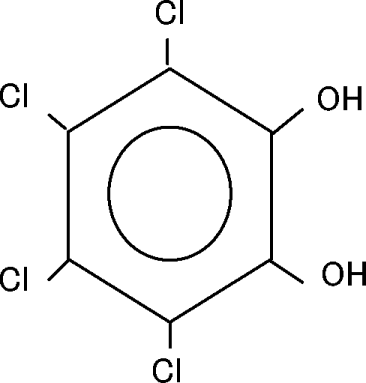
Over 99% of octachlorinated dibenzo-p-dioxin (OCDD) in solution
was decomposed by this method. During the decomposition process, lower
chlorinated congeners of OCDD were not produced, but the production
of 3,4,5,6-tetrachloro-1,2-benzenediol was identified by GC-MS scan
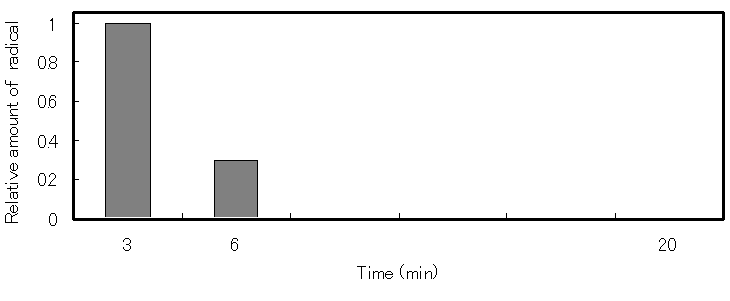
(Fig. 8). Nearly 80% of radicals (quantified by electron spin resonance,
ESR) were produced within 3 min in the decomposition reaction (Fig.
9). These results indicate that PCDD/Fs are decomposed by a radical
reaction.
We examined the optimal conditions for degradation of PCDD/Fs in
paddy soils (Andosol, Yellow soil, and Gray Lowland soil) (Fig.
10).
PCDD/Fs contained in the soils could be decomposed when the proportion
of CaO materials constituted 10% or more of the targeted soil (w/w);
however, the soil pH increased to more than 12 in all soils immediately
and 1 week after addition of the CaO materials remained at this level.
Although the decomposition rate of PCDD/Fs in the Andosol was lower
than that in the other soils, the soil pH also exceeded 12. Because
of this steep increase in soil pH, it is difficult to apply this decomposition
method directly to cultivated soils, but it can be applied to uncultivated
soils with heavy PCDD/F contamination, such as soils in the vicinity
of municipal incinerators. (N. Seike, T. Makino, and T. Otani)
|
| | | |
|
|
|